
Introduction: Yes and No in Korean
In the last lesson, we learned “Thank you” and “Sorry.” Today, let’s learn the most essential topic: Yes and No in Korean.
In English, “Yes” is just “Yes.” But when you use these expressions, you must understand the ‘Polite’ and ‘Casual’ forms. As your Fun Korean Teacher, I will tell you the secret right now!
1. How to Say “Yes” (Ne)
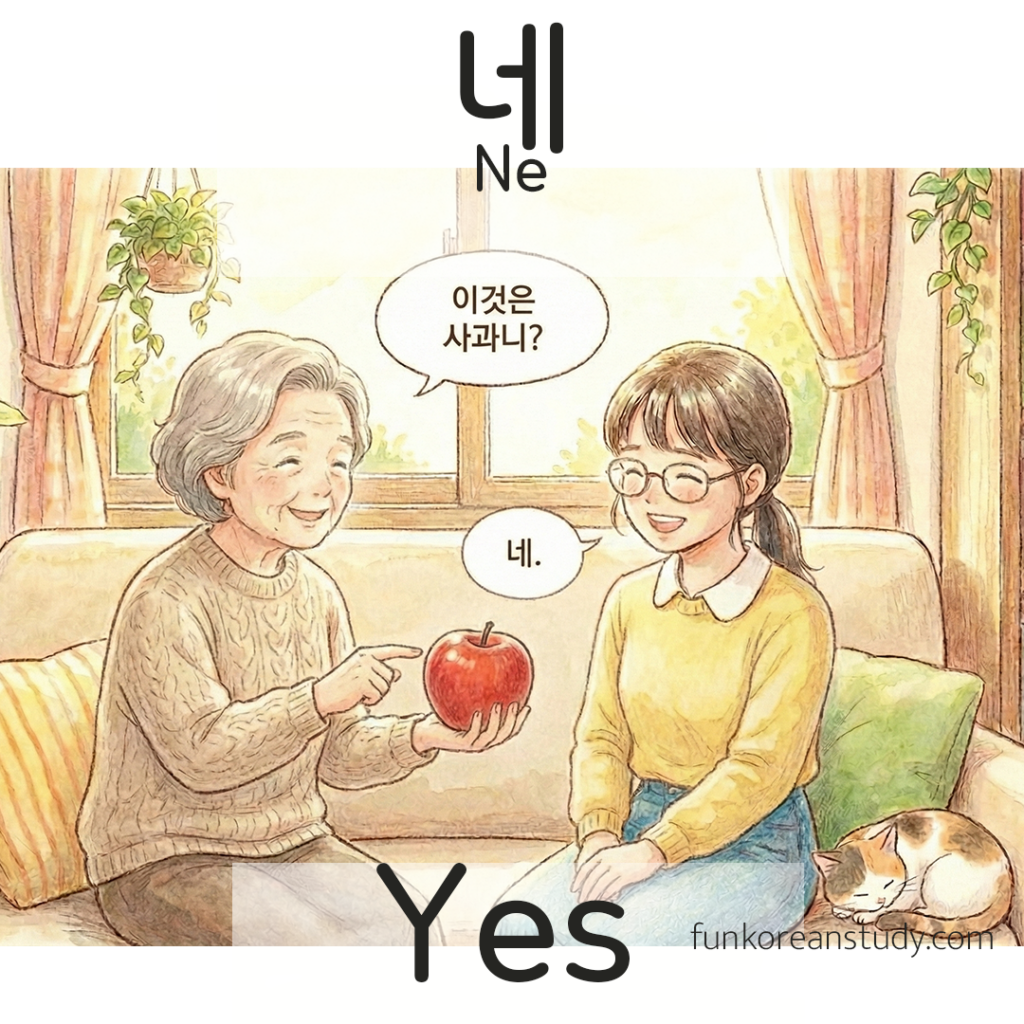
A. Polite Form: Ne (네)
- Pronunciation: Ne (Sounds like ‘Ne’ in ‘Net’)
- When to use: To elders, strangers, or in formal situations.
- 💡 Secret Meaning:
- Koreans use “Ne” NOT only to say “Yes” (agreement).
- We also use it to say “I am listening” or “I understand.”
- So, if you see a Korean nodding and saying “Ne… Ne… Ne…” while you speak, they are showing you respect!
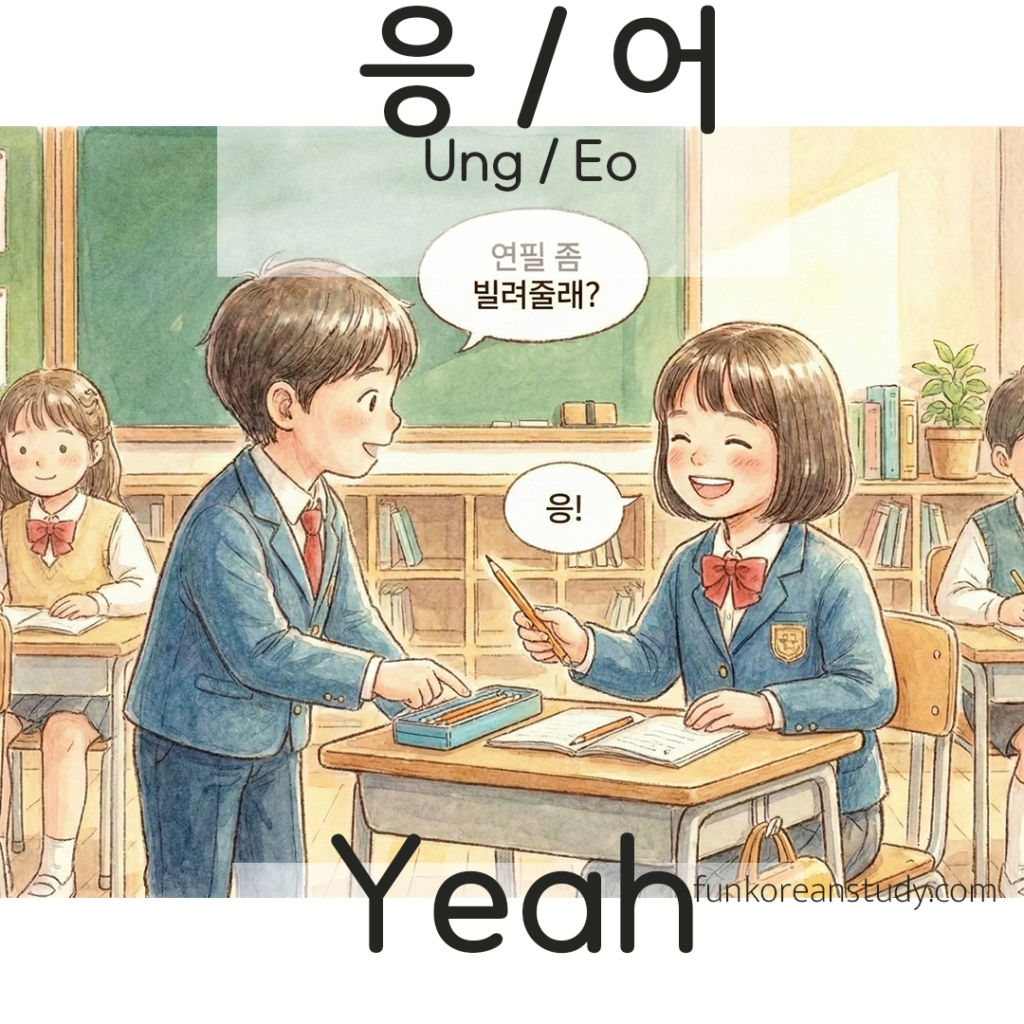
B. Casual Form: Ung (응) or Eo (어)
- Pronunciation: Ung / Eo
- When to use: To close friends and family.
- Note: It sounds like a grunt, but it is a friendly “Yeah!”
2. How to Say “No” (Aniyo)

A. Polite Form: Aniyo (아니요)
- Pronunciation: A-ni-yo
- When to use: To elders or strangers.
- Tip: You can shake your hand slightly in front of your face while saying this. It means “No, no, it’s okay.”
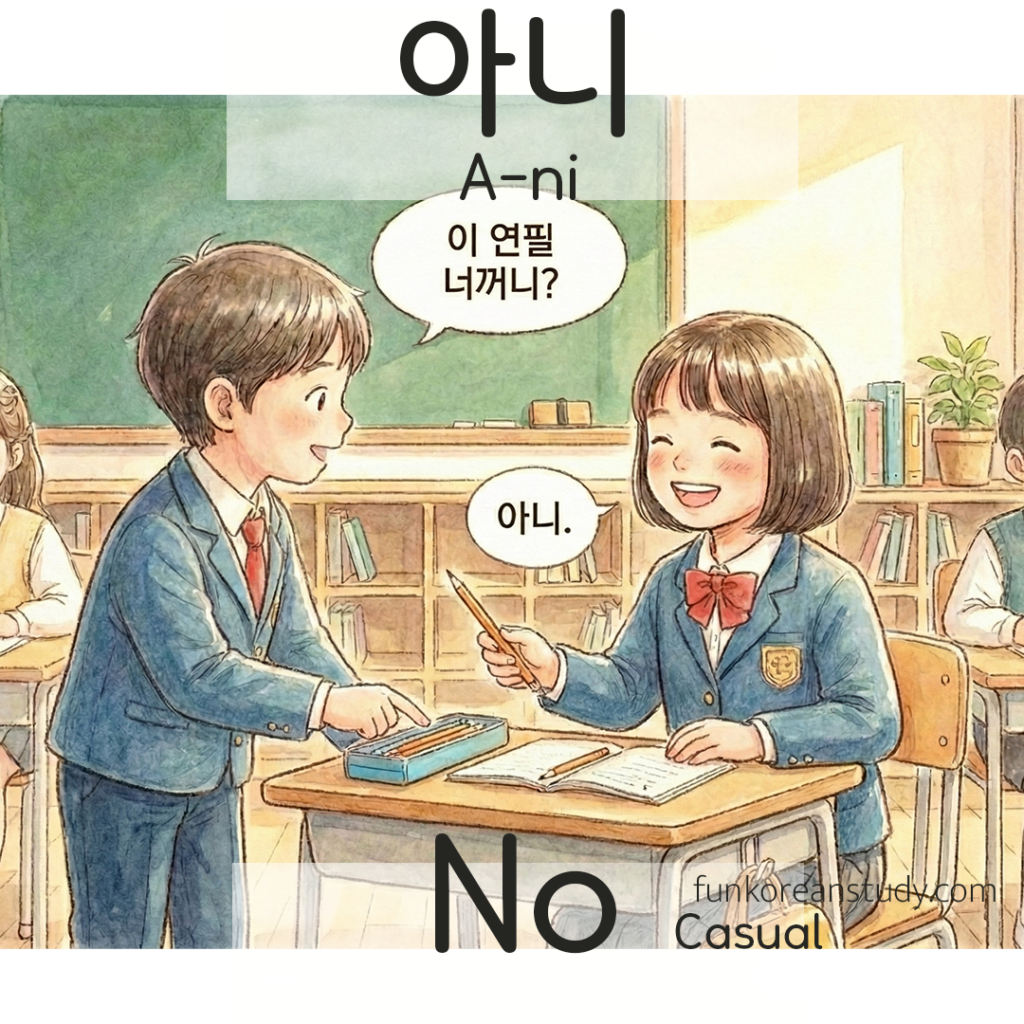
B. Casual Form: Ani (아니)
- Pronunciation: A-ni
- When to use: To friends.
- K-Drama Tip: When a main character denies their feelings (“I don’t like him!”), they shout “Ani!!”
Summary of Yes and No in Korean
Here is a quick table to help you master these words.
| Situation | Yes (English) | Korean | Pronunciation |
| Polite | Yes | 네 | Ne |
| Casual | Yeah | 응 / 어 | Ung / Eo |
| Polite | No | 아니요 | A-ni-yo |
| Casual | No | 아니 | A-ni |
Conclusion: Mastering Yes and No in Korean
Now you can answer any question in Korean! Remember: “Ne” shows you are a good listener, and “Aniyo” is a polite refusal.
Did you miss the last lesson? Make sure to check my post about [Saying Thank You and Sorry] to complete your basic manners set!
Next time, we will learn basic Self-Introduction phrases. See you next time! Annyeong!