
Introduction
Are you wondering how to say Thank you in Korean properly?
Have you ever watched a K-Drama and heard “Gomawo” or “Mianhae”? Saying “Thank you” and “Sorry” is the most basic part of any language.
But in Korean, it can be a little tricky because we have a system of honorifics (polite language) and casual forms.
Don’t worry! As your Fun Korean Teacher, I will make it super easy for you. By the end of this post, you will know exactly what to say to your Korean friends and elders.
1. How to Say “Thank You” in Korean
There are two main ways to say thank you. The key is who you are talking to.

A. Polite Way to Say Thank You in Korean: Gamsahamnida (감사합니다)
- Pronunciation: Gam-sa-ham-ni-da
- When to use:
- To strangers (shop staff, taxi drivers).
- To older people (parents, teachers, boss).
- To anyone you don’t know well.
- Tip: This is the magic word! If you travel to Korea, use this word 100 times a day. You will be loved by Koreans.
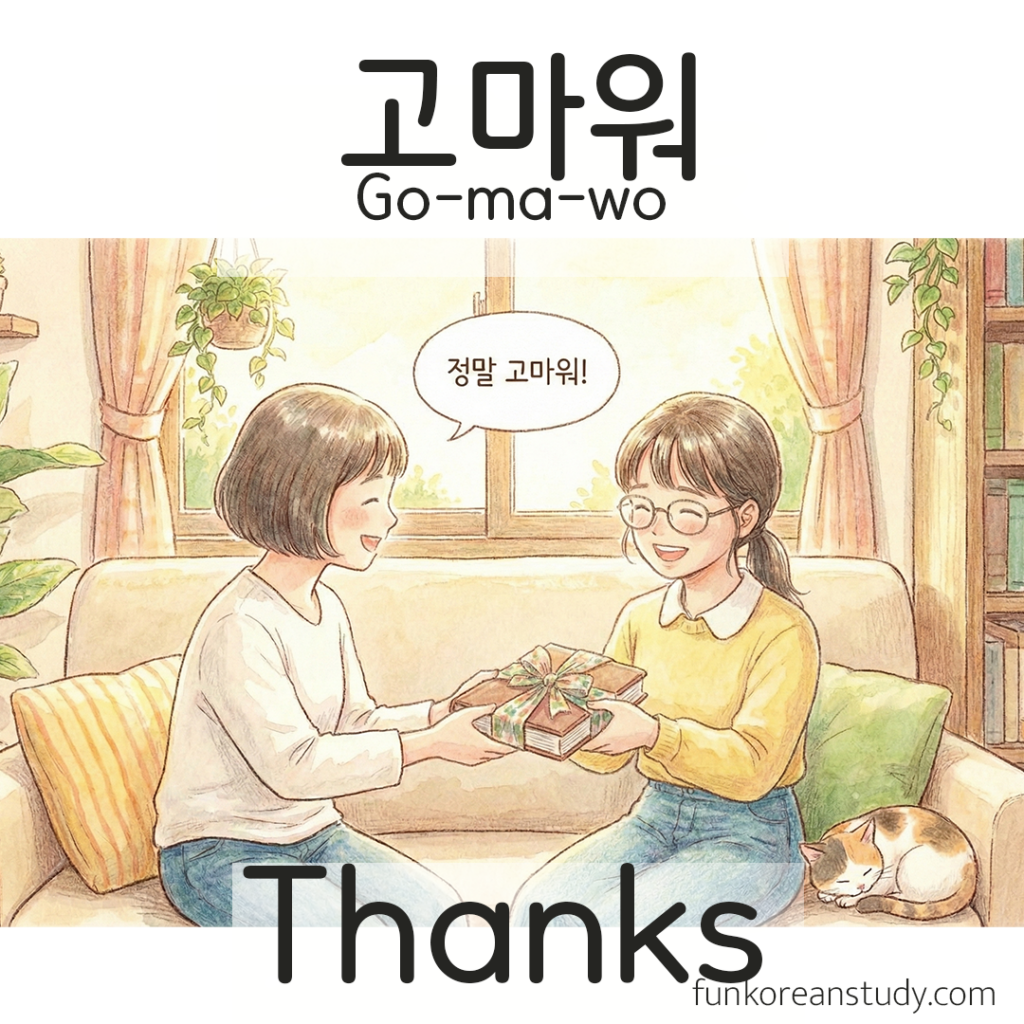
B. Casual Way to Say Thank You in Korean: Gomawo (고마워)
- Pronunciation: Go-ma-wo
- When to use:
- To close friends (same age or younger).
- To your boyfriend or girlfriend.
- To children.
- ⚠️ Warning: Never use this to an older person or a stranger! It can be rude.
2. How to Say “Sorry” in Korean
Just like “Thank you,” “Sorry” also has levels of politeness.
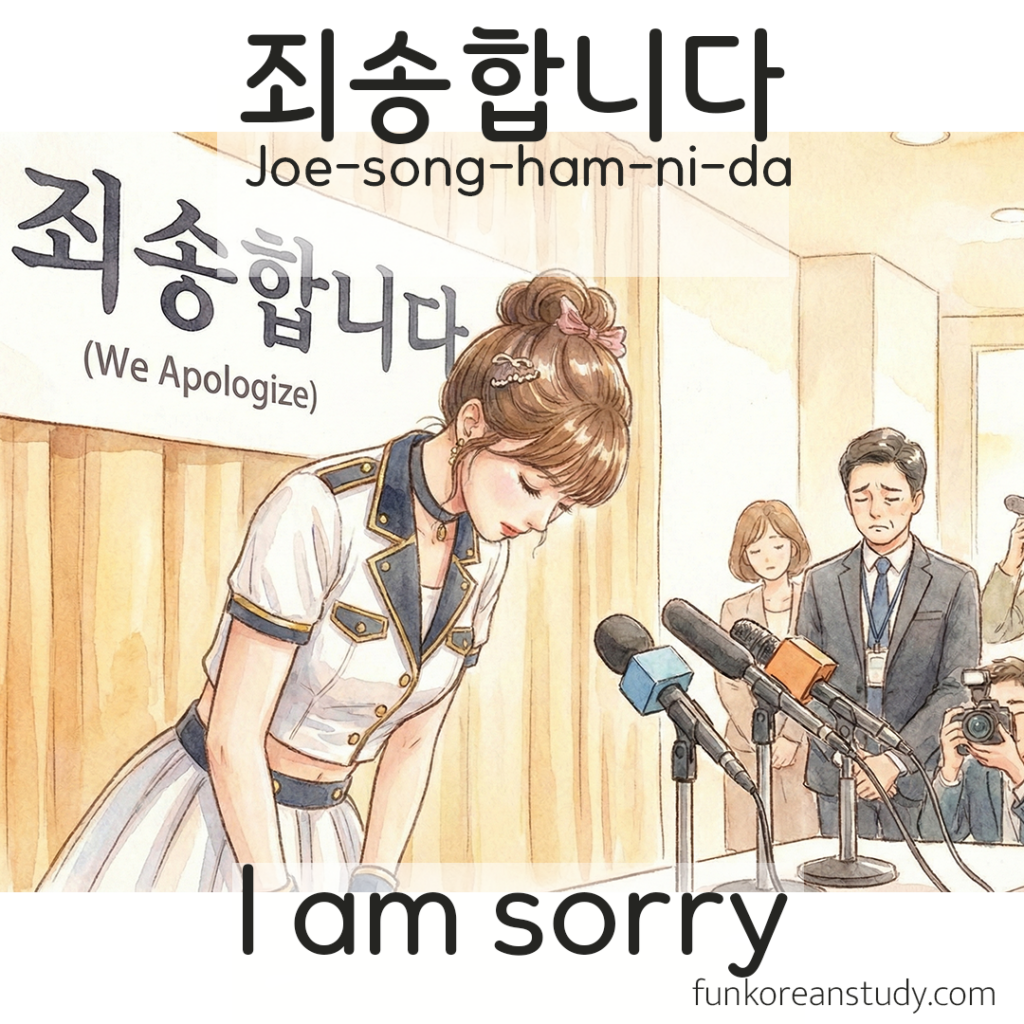
A. Polite Form: Joesonghamnida (죄송합니다)
- Pronunciation: Joe-song-ham-ni-da
- When to use:
- When you made a mistake to a stranger or an older person.
- This sounds very respectful and sincere.
(Note: You can also say Mianhamnida (미안합니다), but Joesonghamnida sounds more polite in formal situations.)
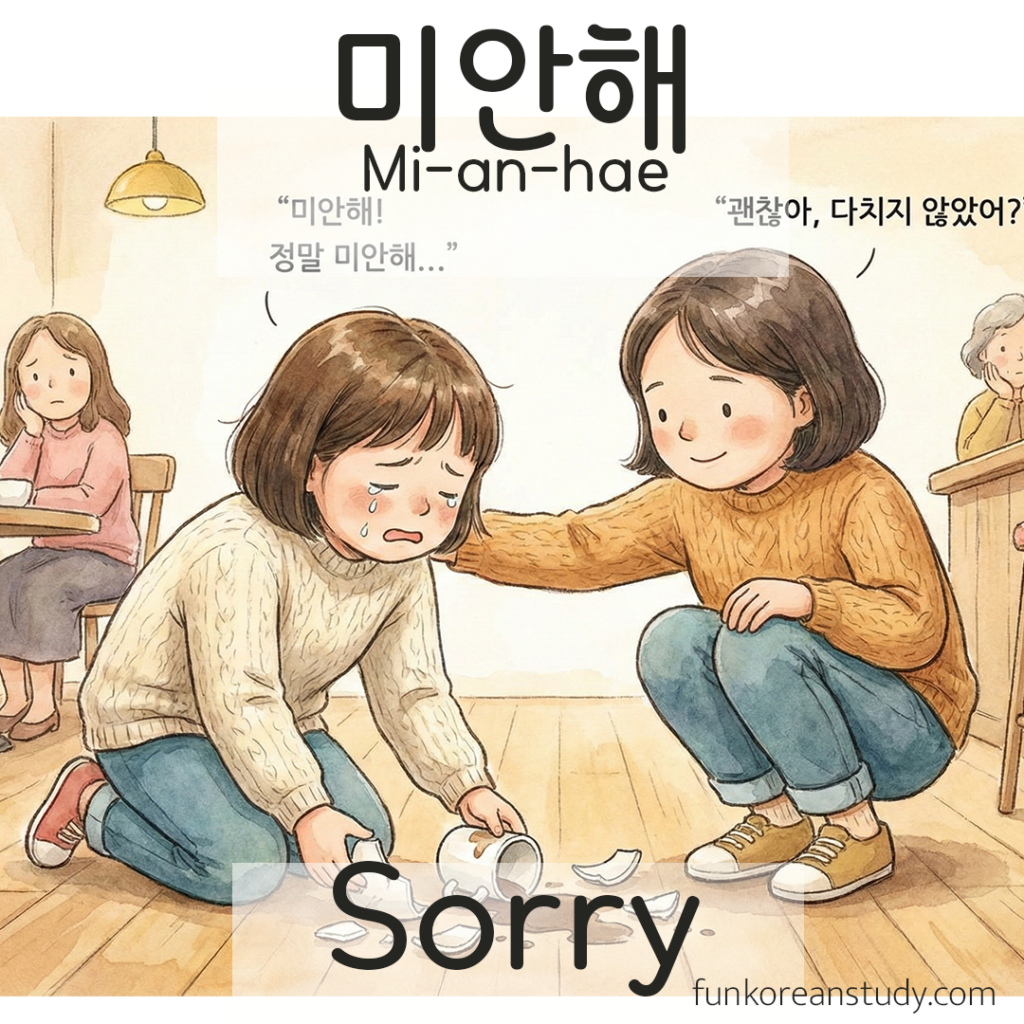
B. Casual Form: Mianhae (미안해)
- Pronunciation: Mi-an-hae
- When to use:
- To friends, family, or younger people.
- K-Drama Tip: You often hear lead characters say “Mianhae…” when they fight or break up! 😭
3. The Secret Sauce: The “Head Bow” 🙇♀️
Here is a pro tip that textbooks don’t teach you.
In Korea, words are not enough.
When you say “Gamsahamnida” or “Joesonghamnida”, you must nod your head slightly or bow.
- Polite: A gentle bow (about 15-30 degrees) shows great manners.
- Casual: A light nod to friends is cool.
If you say it with a stiff neck, it might look unnatural!
Summary: How to Say Thank you, sorry in Korean
Let’s review today’s lesson.
| Situation | Thank You (English) | Korean | Pronunciation |
| Polite (To Elders) | Thank you | 감사합니다 | Gam-sa-ham-ni-da |
| Casual (To Friends) | Thanks | 고마워 | Go-ma-wo |
| Polite (To Elders) | I am sorry | 죄송합니다 | Joe-song-ham-ni-da |
| Casual (To Friends) | Sorry | 미안해 | Mi-an-hae |
Conclusion
Now you are ready to be polite in Korea! Try practicing “Gamsahamnida” out loud right now.
Wait, did you miss the first step? Before learning “Thank you,” make sure you know how to say Hello in Korean first! A good greeting is the start of a good relationship.
Next time, we will learn how to say “Yes” and “No” in Korean. (It’s not as simple as you think!)
Do you have any questions? Please leave a comment below! 👇 Annyeong! (Bye!)